


Getting ahead of retail crime with behavioural detection intervention training
Learn how behavioural detection training helps retail teams spot risk earlier, prevent theft before it happens, and create a safer environment for staff and customers.
Learn how behavioural detection training helps retail teams spot risk earlier, prevent theft before it happens, and create a safer environment for staff and customers.

Physical security training shouldn’t be reactive – done early, it helps people spot and act on small risks before they escalate.
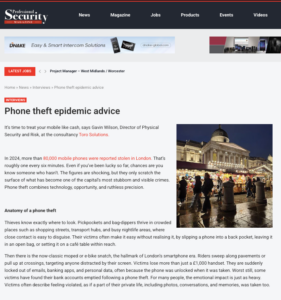
In this piece, Gavin Wilson, tackles London’s growing phone theft epidemic with a simple message: treat your mobile like cash.
With more than 80,000 phones reported stolen in London in 2024, Wilson explains how distraction, visibility and routine behaviour are fuelling opportunistic crime. From e-bike snatches to crowded street pickpocketing, thieves are targeting unlocked devices that hold far more than just resale value, often giving criminals access to banking apps, emails and personal data.
His advice focuses on practical habit changes. Keep devices out of sight, use secure pockets, activate biometric locks and remote wipe features, and avoid using your phone openly in high-risk areas. Small behavioural shifts, he argues, can make you a far less attractive target and significantly reduce the risk of becoming the next statistic.
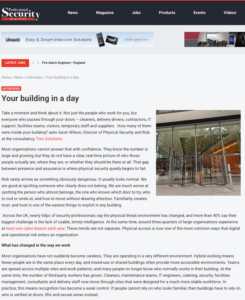
In this interview, Gavin Wilson, Director of Physical Security and Risk at Toro Solutions, asks a straightforward question: do you really know who was in your building today?
He looks at how hybrid working, shared offices and the rise in third-party access have made traditional, trust-based security far less reliable. Physical access is no longer just a facilities issue, it is part of your wider risk exposure.
Drawing on Toro’s experience inside client environments, Gavin explains why controls often exist but do not connect and why visibility, confident challenge and joined-up thinking make the real difference when something goes wrong.
In this recent press piece, Toro Solutions’ Directors of Cyber Security and Physical Security and Risk discuss why resilience is about people, not paperwork.
They argue that most organisations don’t fall short because they lack plans, but because their teams operate in silos. When cyber, physical and operational functions fail to share context early, warning signs are missed and response slows down. Convergence, they explain, isn’t about restructuring it’s about getting the right people talking before small issues turn into bigger problems.
Because when pressure hits, it’s not the plan that makes the difference, it’s how well your teams work together.

Learn how to build a strong security culture by embedding practical processes, leadership support and behaviour-based training into everyday operations.

Learn how to recognise and respond to social engineering attempts with practical steps to verify requests, limit information sharing and reduce organisational risk.

At Toro, physical security training is about behaviour, not just rules. We teach people how real incidents start, how attackers exploit politeness and routine, and how small actions by ordinary staff prevent serious harm.

Without a security-conscious approach, remote working can unintentionally expose organisations to cyber, physical and information security risks.

Most physical security incidents do not start with someone forcing a door or smashing a window. They begin with someone walking into a space where they do not belong and no one feeling comfortable enough to say anything. In busy offices, hospitals, warehouses, data centres and shared buildings, people are taught to be helpful, polite

In a time when technology can monitor almost everything, it is easy to forget that human judgment is still at the centre of effective security. That is where surveillance training becomes essential.

Hybrid working has changed travel – commuting, client visits, and remote work all carry risks. Learn how to protect your team wherever they go.