

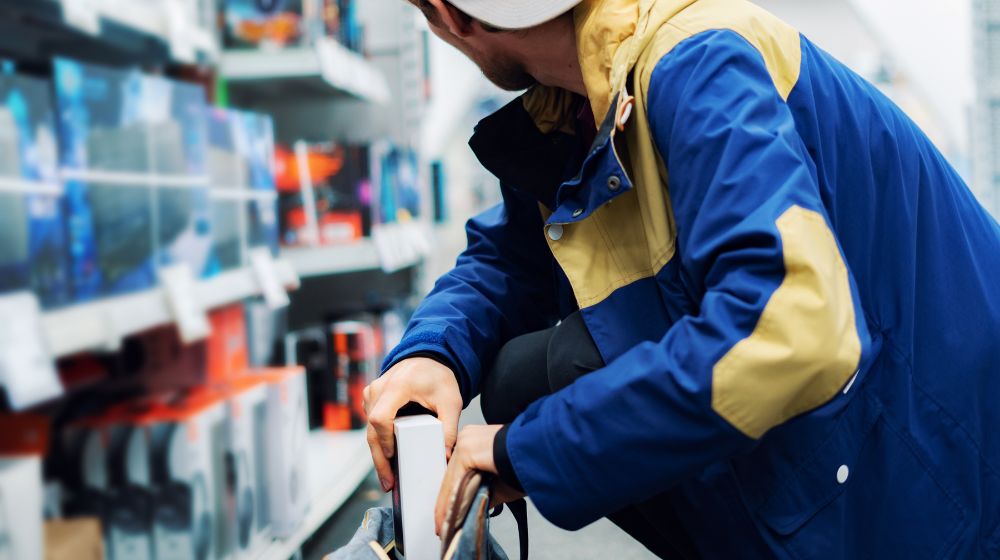
Retail security has never been more challenging.
Shoplifting in England and Wales has reached a 20-year high, with over 530,000 offences recorded in the year ending March 2025, a 19.5% increase on the previous year. For retailers who already invest heavily in security, those numbers are frustrating.
We believe part of the answer lies in what happens before an incident develops.
Why earlier intervention makes a difference
Most security measures do exactly what they are designed to do. The challenge is that theft, particularly organised retail crime, has become more sophisticated and harder to disrupt once it is already in motion. By the time a tag triggers or footage is reviewed, the opportunity to prevent the incident has usually passed.
Behavioural detection early intervention (BDEI) training works alongside existing measures to address that earlier window, giving staff the skills to recognise risk before it becomes a crime and the confidence to act on what they are seeing.
What the training actually involves
The core idea is straightforward. People shopping normally behave in recognisable ways and when someone is under stress, scoping out a store or preparing to steal, that behaviour tends to change. The changes are often subtle, but they are usually readable with the right training.
BDEI teaches staff to establish what normal looks like in their specific environment and recognise when something does not quite fit. That might be someone repeatedly scanning staff positions rather than browsing, a group whose movements seem coordinated or an individual spending extended time near high-value areas with no clear purpose. None of those things prove intent on their own but they give staff a reason to engage earlier, calmly and in a controlled way. Behavioural detection focuses on observable behaviour rather than profiling individuals. It helps staff recognise patterns linked to concealment, surveillance of staff and exits, or coordinated distraction techniques between individuals, behaviours often associated with organised retail theft.
That early engagement matters more than it might seem. A brief, professionally handled customer interaction can be enough to disrupt behaviour and remove the easy opportunity without any confrontation or formal challenge. Organised retail crime groups and repeat offenders look for environments where that kind of early intervention feels unlikely.
Staff safety sits at the heart of this
The British Retail Consortium’s most recent Crime Survey found that retail workers in the UK experienced 1,300 incidents of violence and abuse every single day. That is an extraordinary figure, and it reflects something most retailers already know – the pressure on frontline staff has become genuinely serious.
Behavioural detection training helps here too. Most difficult confrontations in retail do not start as confrontations. They develop from situations that were not spotted or managed early enough. Training staff to engage before tension builds, communicate confidently under pressure and de-escalate situations that are becoming difficult gives them a much better chance of resolving things before they turn aggressive. A key part of the training focuses on tactical communication, helping staff approach situations professionally and confidently while reducing the likelihood of confrontation.
Building confidence on the floor
Many retail staff are already picking up on warning signs without necessarily knowing what to do with them. That instinct is valuable and behavioural detection training gives people a clearer framework to build on it. Rather than second-guessing themselves or waiting until they are certain, trained staff have a reliable method for assessing what they are seeing and deciding on a proportionate response.
At Toro, our behavioural detection early intervention (BDEI) training is built around real retail environments rather than generic scenarios. The training is tailored to the specific setting, whether that is a high street store, a supermarket or a large retailer, so staff can apply what they have learned straight away. The goal is a team that makes better decisions earlier, not a team that over-challenges customers or creates unnecessary tension.
What it means for the wider environment
One of the less obvious benefits of this kind of training is the effect it has on a store over time. When a team is switched on and willing to engage, the environment feels different. Customers tend to notice it and so do potential offenders. A store where staff are clearly paying attention is a harder target and among organised groups who move between locations looking for the easiest opportunity, that reputation matters.
In that sense, behavioural detection training is as much about culture as capability. It supports frontline teams to take ownership of what they observe and act on it effectively, which over time shapes how a store feels to work in and to shop in.
Where this fits in the bigger picture
With shoplifting at a 20-year high and the pressure on retail staff continuing to grow, finding ways to get ahead of crime rather than just respond to it has become increasingly important. Behavioural Detection and Early Intervention training is not a replacement for what retailers already have in place. It is a practical way to strengthen it, equipping teams to recognise risk earlier and intervene more effectively at the point where crime and incidents can still be prevented.
For retailers looking to reduce losses and better protect their staff, it is a well-evidenced and genuinely practical place to start.
Take the next step
Investing in behavioural detection training gives your team the skills to spot risk earlier, respond with confidence and handle difficult situations before they escalate. Toro’s BDEI training is built around your specific environment, so staff get practical, relevant learning they can apply straight away rather than generic content that needs translating back to the shop floor.
If you want to find out more about how our training could work for your business, get in touch with the Toro team today.
https://www.bbc.co.uk/news/articles/cq8z8kdd8zvo
https://www.theguardian.com/business/2024/feb/14/violence-and-abuse-against-uk-retail-staff-rises-to-1300-incidents-a-day