

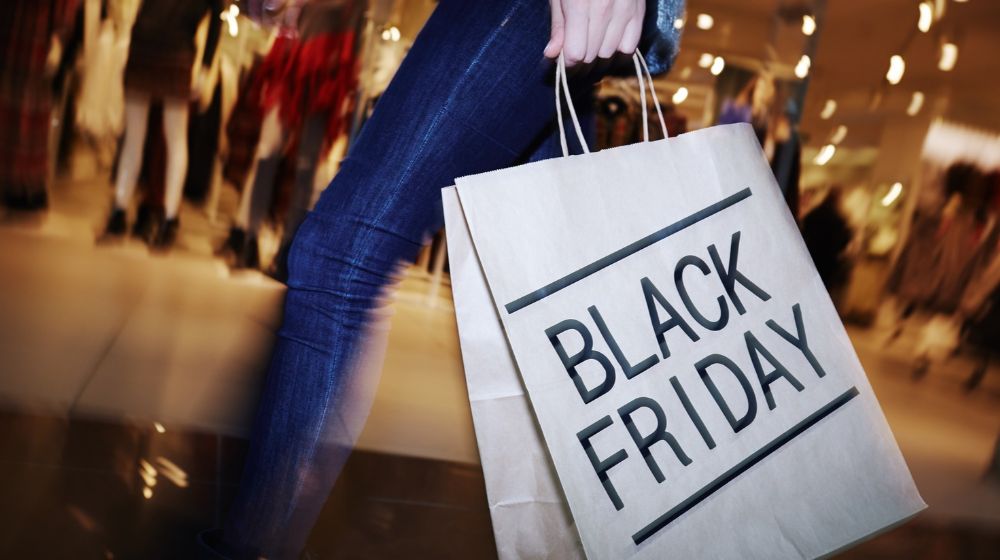
Is it just us, or do Black Friday deals seem to start earlier every year?
As soon as November arrived, our inboxes, social media feeds and favourite retailers were full of offers. What used to be a single day of discounts now seems to stretch across several weeks.
And while plenty of us will be looking out for a bargain, we’re not the only ones taking advantage.
For cyber criminals and fraudsters, Black Friday is like birthday and Christmas all rolled into one. More people shopping online, more promotional emails, more deliveries and plenty of opportunities to catch people off guard.
The scams themselves aren’t necessarily new, but some are becoming much harder to spot. AI is making it easier for criminals to create convincing websites, adverts and messages. Meanwhile, familiar tactics such as fake delivery notifications and impersonating trusted retailers continue to catch people out.
So, what scams should you be looking out for this Black Friday and what can you do to avoid falling victim?
One of the biggest changes is how convincing online scams have become.
We’ve all heard the advice about looking for spelling mistakes, poor-quality websites and suspicious emails. Those are still worth checking, but they’re no longer reliable ways to distinguish a genuine business from a fraudulent one.
AI makes it easier to produce professional looking websites, realistic product images, fabricated customer reviews and convincing messages.
In September 2026, National Trading Standards reported that 47% of UK adults surveyed felt it was becoming harder to tell what was genuine online. Its research also highlighted how criminals are using AI-generated websites, deepfake videos and cloned voices to make existing scams more convincing.
But it’s not all about AI. Some scams still rely on convincing someone there’s a problem and offering to help them fix it.
Victims were contacted by someone claiming to be from Amazon, warning that suspicious purchases had been made using their accounts. The criminals then offered to help stop the transactions, persuading people to share their screens, install remote access software or authorise fraudulent payments.
It’s a reminder that while the technology behind scams is changing, criminals are still exploiting something much more familiar: our instinct to act quickly when we think our money or personal information is at risk.
Five Black Friday scams to watch out for:
1. That bargain you’ve spotted on social media
You’re scrolling through Instagram or Facebook when an advert catches your eye. It’s a toy you’ve been thinking about getting for the kids and it’s now half price. The photos look great, there are hundreds of positive reviews and plenty of people commenting on what a bargain it is.
It looks like a great deal. But how do you know it’s genuine?
Criminals use paid social media adverts to lure shoppers towards fraudulent websites. They can use AI generated images, fake reviews and manipulated videos to make their offers appear more convincing. Some even impersonate familiar brands or use fake celebrity endorsements.
And just because an advert appears on a major social media platform doesn’t mean the business behind it is legitimate. Even hundreds of glowing reviews aren’t necessarily proof that you’re buying from a genuine seller.
Our advice: If you see an offer from a retailer you recognise, visit its official website or app rather than clicking the advert. For unfamiliar sellers, check independent reviews and contact details before buying. Don’t rely on the comments attached to an advert to decide whether it’s genuine.
2. The online shop that looks completely genuine
Fake shopping websites have been around for years, but creating a convincing one has become much easier.
A fraudulent website might have professional branding, detailed product descriptions, customer testimonials and what appears to be a legitimate UK business address.
Some even invent a backstory about the business, complete with photographs of supposed owners and claims about where products are made.
National Trading Standards has warned about AI-generated retail websites designed to impersonate genuine independent businesses.
Another development worth watching is fraudulent websites appearing in AI-generated search recommendations. In June 2026, National Trading Standards warned that criminals were manipulating information used by AI search tools to increase the likelihood of scam websites being recommended to consumers.
Our advice: Don’t assume a website is genuine because it looks professional or appears in search results. Check the web address carefully, look for independent information about the business and be cautious if the only payment option is a bank transfer.
Remember, the padlock symbol and HTTPS connection mean your connection to a website is encrypted. They don’t prove that the business itself is trustworthy.
3. The delivery scam that doesn’t end with a small payment
You’ve ordered several things online and are waiting for them to arrive. Then a text comes through claiming that a parcel couldn’t be delivered because of an incorrect address or an outstanding fee.
There’s a link to rearrange delivery, and you’re asked to pay a small amount, perhaps £1 or £2.
It doesn’t seem like much, particularly when you’re expecting a parcel. But the link could take you to a fake courier website designed to collect your card details and personal information.
And sometimes, that small payment is only the beginning.
At Toro, we’ve seen examples where an individual received a text requesting a small payment to cover delivery costs. They made the payment, believing the request was genuine.
Shortly afterwards, they were contacted by someone claiming to be from their bank. The caller warned that they’d been targeted by fraudsters and offered to help protect their money.
But the caller was part of the scam. They persuaded the individual to transfer money to another account, supposedly to keep it safe.
It’s a particularly concerning tactic because the criminals first create a problem and then pretend to be the people who can help resolve it.
Our advice: Don’t click links in unexpected delivery messages. Check your order through the retailer’s website or app or enter the tracking number directly into the courier’s official website. If someone subsequently contacts you claiming to be from your bank, end the call and contact your bank independently using the number on your card or its official app. Never transfer money to a supposedly safe account, regardless of how convincing the caller sounds or what information they appear to know about you.
4. The marketplace deal that’s too good to miss
Online marketplaces can be a good place to find discounted products, but criminals also use these platforms to advertise products they have no intention of delivering.
You might find a popular item at a particularly attractive price. The seller seems genuine, provides photographs and answers your questions. But when it comes to paying, they ask you to transfer the money directly or move the conversation away from the marketplace.
They might claim it’s to avoid fees or offer an additional discount if you pay outside the platform.
Once the money has been transferred, the seller disappears.
Our advice: Check the seller’s history, feedback and how long they’ve been active on the platform. Keep conversations and payments within the marketplace wherever possible and use payment methods that offer buyer protection. If a seller insists on a bank transfer or tries to rush you into making a payment, consider walking away.
5. The giveaway or exclusive offer you’ve apparently won
You’ve been selected to receive a free gift, won a Black Friday competition or been offered a mystery box from a well known retailer.
All you need to do is complete a short survey or pay a small delivery fee.
It sounds harmless enough, but these promotions can be designed to collect your personal information, steal payment details or sign you up to unwanted recurring payments.
Fraudsters create fake social media accounts and websites that impersonate genuine retailers. Some also use AI-generated images or endorsements to make the promotions look more credible.
Our advice: Check whether the promotion exists on the retailer’s official website or verified social media account.
Be wary of unexpected prizes that require you to provide card details or make a payment before you can claim them. And remember, just because a post has been shared thousands of times doesn’t mean it’s genuine.
What about those huge Black Friday discounts?
Not every questionable Black Friday offer is a scam designed to steal your money or personal information. Sometimes, the advertised saving simply isn’t as good as it appears.
Research published by Which? in 2025 found that all 175 Black Friday deals it examined had been available at the same price or cheaper at another point during the six months before or after Black Friday.
That doesn’t mean every discount is misleading, but it does show why a large percentage reduction isn’t necessarily evidence of a good deal.
Before buying, compare prices across retailers and where possible, use a price-history tool to check whether the product has genuinely been reduced.
And don’t let a countdown timer pressure you into making a decision.
A few final precautions worth taking
Alongside checking retailers and questioning unexpected messages, there are a few other things worth doing before the Black Friday sales.
- Use payment methods that offer protection. Credit cards can provide additional protection for qualifying purchases under Section 75 of the Consumer Credit Act. Established payment services may also offer buyer protection, depending on their terms. Avoid direct bank transfers to unfamiliar sellers.
- Protect your accounts. Use strong, unique passwords and enable multi factor verification or passkeys where available, particularly for your email, banking and shopping accounts.
- Keep your devices updated. Install security updates for your phone, computer and browser. These help protect against known vulnerabilities that criminals could exploit.
- Take your time. Criminals often create urgency because they don’t want you to stop and question what you’re being told. If you’re being pressured to act immediately, that’s a good reason to slow down.
What should you do if you’ve been scammed?
If you think you’ve made a payment to a fraudulent retailer or entered your card details on a suspicious website, contact your bank or card provider immediately.
If you’ve shared a password, change it straight away and update any other accounts where you’ve used the same credentials. If you’ve allowed someone remote access to your device, disconnect it from the internet and seek professional advice before using it for sensitive activities again.
You should also report suspicious activity:
- Scam emails: Forward them to report@phishing.gov.uk.
- Suspicious text messages: Forward them to 7726.
- Fraudulent websites: Report them through the National Cyber Security Centre.
- Financial fraud: Report it to Report Fraud in England, Wales or Northern Ireland, or Police Scotland if you’re in Scotland.
Enjoy the bargains, but don’t let the pressure make the decision
Black Friday can be a good opportunity to save money but as scams become more convincing, it’s worth changing how we assess what we see online.
We’re used to checking whether something looks suspicious. Increasingly, we also need to check whether it can be independently verified. A few minutes spent checking a retailer, questioning an unexpected message or comparing prices could save you considerably more than the discount you’re being offered. And if you miss a deal because you took the time to check, there will almost certainly be another one along soon.